
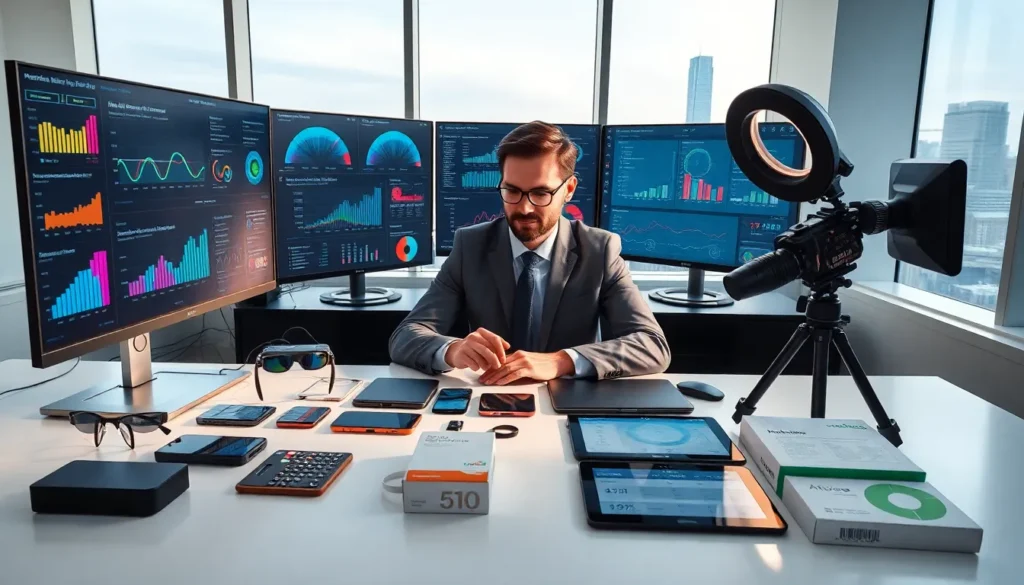
Tech reviews trends 2026 will reshape how consumers evaluate and purchase devices. The industry is shifting toward smarter analysis tools, immersive video content, and a stronger emphasis on environmental responsibility. Reviewers and brands alike are adapting to meet these changes head-on.
This year marks a turning point. Audiences want more than spec sheets and benchmark scores. They demand authenticity, practical insights, and transparency about product longevity. The tech reviews trends 2026 landscape reflects these priorities clearly. From AI-driven analysis to hands-on demonstrations, here’s what’s coming next.
Table of Contents
ToggleKey Takeaways
- Tech reviews trends 2026 prioritize AI-powered analysis tools that automate benchmark comparisons and summarize real-world user feedback from thousands of sources.
- Short-form and long-term video content is dominating tech reviews, with creators documenting months of real-world use to show battery health, software impacts, and wear patterns.
- Sustainability and repairability scores now carry as much weight as performance benchmarks, with reviewers scrutinizing carbon footprints, modular designs, and packaging.
- Emerging device categories like smart glasses, AI wearables, home robotics, and foldable devices are reshaping what tech reviews trends 2026 evaluate.
- Transparent disclosure about AI tool usage and human testing is becoming an ethical expectation audiences demand from reviewers.
- Accessibility features like auto-captions and translated subtitles are now standard, making inclusive content creation essential for reaching global audiences.
AI-Powered Review Tools and Analysis
Artificial intelligence is transforming how tech reviews are created and consumed in 2026. Reviewers now use AI tools to automate benchmark comparisons, identify performance anomalies, and generate data visualizations in seconds. This shift saves time and increases accuracy.
AI-powered sentiment analysis has become standard practice. These tools scan thousands of user comments and forum posts to identify common complaints or praise points. A reviewer can now summarize real-world feedback from hundreds of sources before writing a single word. Tech reviews trends 2026 show that audiences trust data-backed conclusions more than subjective opinions alone.
Natural language processing helps reviewers spot patterns in product specifications across brands. Want to compare battery degradation rates across five flagship phones? AI handles that comparison instantly. This technology democratizes access to deep analysis that once required specialized expertise.
Some platforms now offer AI-generated summaries alongside full reviews. Readers short on time can get key takeaways in bullet form while still having access to detailed breakdowns. Critics worry this approach oversimplifies complex products, but adoption rates suggest consumers appreciate the option.
The integration of AI also raises questions about authenticity. Readers want to know if a human actually tested the device or if algorithms did the heavy lifting. Transparent disclosure about AI tool usage is becoming an ethical expectation in tech reviews trends 2026.
The Rise of Hands-On Video Content
Video content dominates tech reviews in 2026. Written reviews still matter, but audiences increasingly prefer watching real-world demonstrations over reading specifications. Short-form videos under three minutes perform especially well on social platforms.
Creators are investing in better production quality. Slow-motion drop tests, thermal imaging during stress tests, and macro lens shots of build quality have become standard. These visual elements communicate information faster than paragraphs of text ever could.
Live streaming product unboxings and first impressions generate immediate engagement. Viewers ask questions in real time, and creators can address concerns on the spot. This interactive format builds trust between reviewers and their audiences. Tech reviews trends 2026 favor this direct connection.
Long-term review videos are gaining traction too. Instead of publishing impressions after a week of testing, creators document six months of daily use. They show battery health decline, software update impacts, and wear patterns on physical components. This approach provides value that traditional reviews cannot match.
Platforms like YouTube, TikTok, and Instagram Reels compete for creator attention. Each platform rewards different content styles. Tech reviews trends 2026 show successful creators adapting their format for each audience rather than posting identical content everywhere.
Accessibility features are improving as well. Auto-generated captions, audio descriptions, and translated subtitles expand reach to global audiences. Inclusive content creation is no longer optional, it’s expected.
Sustainability and Repairability Focus
Environmental concerns shape tech reviews trends 2026 more than ever before. Consumers want to know if devices can be repaired, recycled, or upgraded. Reviewers are responding by dedicating entire sections to sustainability metrics.
Repairability scores now appear alongside performance benchmarks. Organizations like iFixit have influenced how reviewers evaluate product design. A phone with a glued-in battery receives criticism regardless of its camera quality. Audiences factor long-term ownership costs into purchase decisions.
Manufacturers are listening. Several major brands now ship devices with modular components and provide official repair manuals. Some offer trade-in programs with genuine recycling commitments. Tech reviews in 2026 verify these claims rather than accepting marketing promises at face value.
Carbon footprint disclosures are becoming common in product reviews. Reviewers compare the environmental impact of manufacturing, shipping, and disposal across competing products. This information helps eco-conscious buyers make informed choices.
Right-to-repair legislation in multiple regions has accelerated this trend. Companies that resist repair-friendly design face public criticism and regulatory pressure. Tech reviews trends 2026 reflect a market where sustainability is a competitive advantage, not just a marketing buzzword.
Packaging receives scrutiny too. Excessive plastic, oversized boxes, and unnecessary accessories draw negative attention. Minimalist, recyclable packaging earns praise in product evaluations.
Emerging Device Categories to Watch
New product categories are generating significant review interest in 2026. Smart glasses have moved beyond novelty status. Multiple manufacturers now offer lightweight, stylish designs with practical functionality. Reviewers test display clarity, battery life, and social acceptability in public settings.
AI-powered wearables represent another growth area. Devices that monitor health metrics and provide real-time coaching are attracting mainstream attention. Tech reviews trends 2026 examine accuracy claims by comparing readings against medical-grade equipment.
Home robotics has expanded beyond vacuum cleaners. Household robots that fold laundry, organize shelves, and assist with cooking are entering consumer markets. Early reviews focus on reliability and whether these devices actually save time in real homes.
Portable power stations and solar charging solutions continue gaining popularity. Remote workers, outdoor enthusiasts, and emergency preparedness buyers drive demand. Reviewers test capacity claims, charging speeds, and durability under various conditions.
Spatial computing devices are maturing as well. Mixed reality headsets offer improved comfort and practical applications beyond gaming. Tech reviews in 2026 evaluate productivity workflows, social features, and content libraries alongside technical specifications.
Foldable devices now span multiple form factors. Phones, tablets, and laptops with flexible displays require new evaluation criteria. Reviewers assess crease visibility, hinge durability, and software optimization for these unique screens.


